Without fabrics there would be no cloth and we might as well use leaves to cover our nakedness like in the garden of Eden. Clothes are almost as essential as air and water, so it’s safe to say fabrics are necessities.
The word fabric is derived from the word ‘fiber’ which defines a tiny thread. Fabrics are made up of many textile fibers woven together to form yards and yards of clothes. Yard is a standard unit of measuring the width of a fabric. A yard comprises of 36 inches or 91.44 centimeters of cloth.
There are TWO major groups of fabrics. This classification is based on the source of the fabric.
- Natural fabrics
- Synthetic fabrics
Natural Fabrics
These are fabrics gotten from fibres of plants and animals. The fibres of natural fabrics are spun from natural elements and living organisms provided by nature. Natural fabrics still undergoes some processes to turn it from the raw materials brought from the farm to recyclable fabrics for clothing.
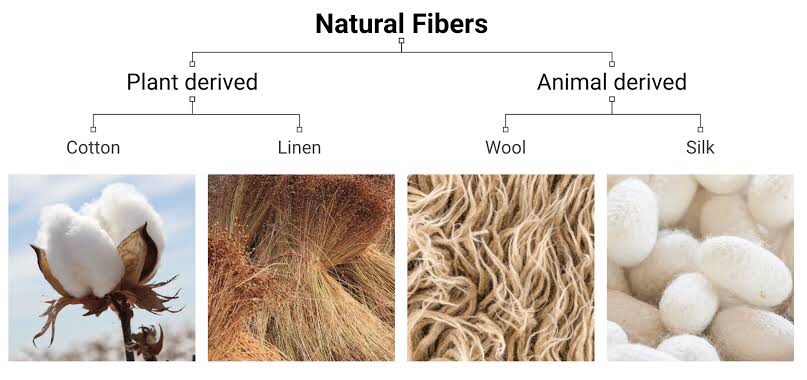
Natural fibers are either plant derived or animal derived.
Some examples of natural fabrics are;
- Fur; gotten from the hide of furry animals.
- Wool; from the fleece of sheep and lambs
- Leather; gotten from the skin of animals
- Cotton; woven from the cotton plant
- Hemp; spun from the fibres of the cannabis sativa plant
Synthetic Fabrics
Synthetic fabrics are made from fibres derived by human beings from chemical synthesis and experiments. Synthetic fabrics are also called man made fabrics as they do not occur naturally. These synthetic fabrics may exist as a result of humans trying to replicate natural fabrics or by mixing different fibres (either natural or synthetic or the both) to create very unique fiber strands.
Some examples of synthetic fabrics include;
- Nylon; it is made from crude oil
- Polyester; this is derived from petroleum
- Spandex; obtained from polyurethane
- Acrylic ; made by processing acrylonitrile.


