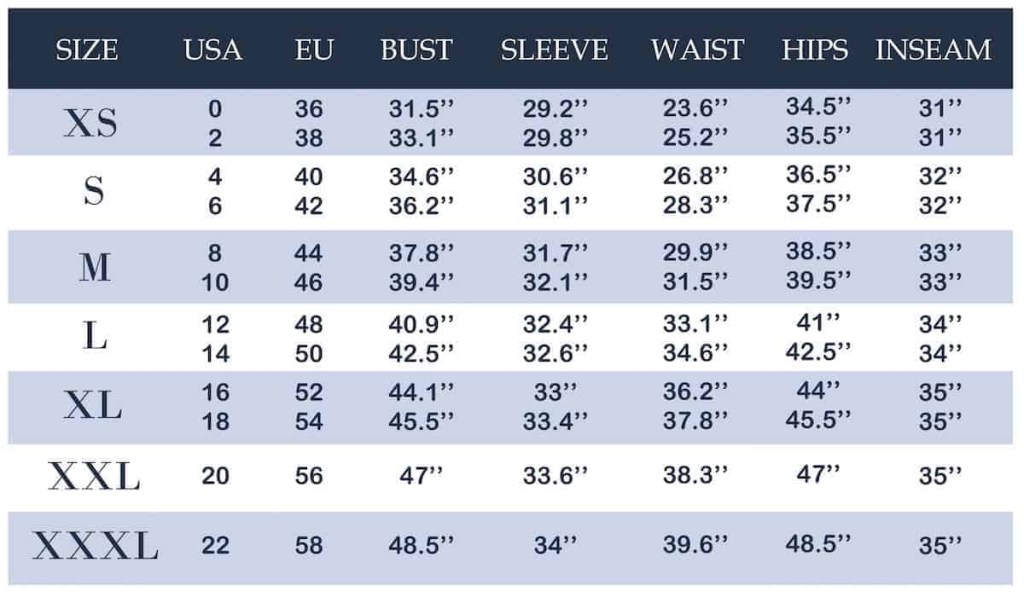
In the art of cloth making, somethings are essential for a well fitted cloth. One of such things is the measurement and sizing of the intended wearer of the cloth. To get a perfectly fitted cloth, the fabric should be cut in accordance to the specific measurements of the body. Such measurements are taken with a measuring tape and is sometimes converted into a sizing chart that can be used by various people with that same body size. These sizing charts also differ from country to country, region to region and even fashion brand to fashion brand. You can make your own sizing chart that your clients can reference to.
To take measurements, you’ll be needing three essentials;
- A measuring tape (it has two side. One side had inches and the other centimeters),
- A notepad for recording your readings and
- A pen to write with.
I usually carry these items in my bag at all times because I never know when I would run into a potential client and overall they tend to come in very handy. It also makes you appear serious with your job as a designer.
With these items in check, the next course of actions is to know where exactly you are going to be measuring on the body. First, we have three basic body measurements take, most sizing charts work with only these three parameters ;
- Waist (wrap the tape round the waist of the client the get the circumference).
- Bust (wrap the tape around the bosom /breasts/chest of the client to get Bust).
- Hips [wrap the tape around the hips to get the hip measurement. Make sure the tape wraps around tightly).
Other parts that are usually to measured are,
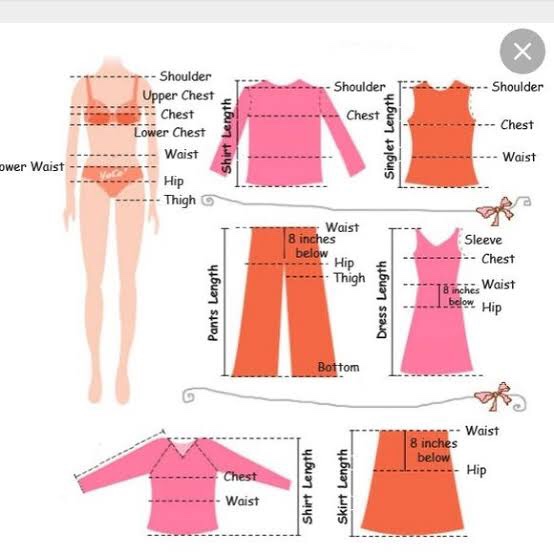
- Shoulders distance
- Shoulder to under bust length
- Shoulder to nipple
- Nipple to Nipple
- Armhole
- Under bust circumference
- Waist to knee
- Full length (for blouse, short skirt, long skirt, gown or trousers)
- Crotch depth
- Sleeve length
- Sleeve circumference
- Round thighs
- Others depending on the house style of the fashion designer or other personal preferences.
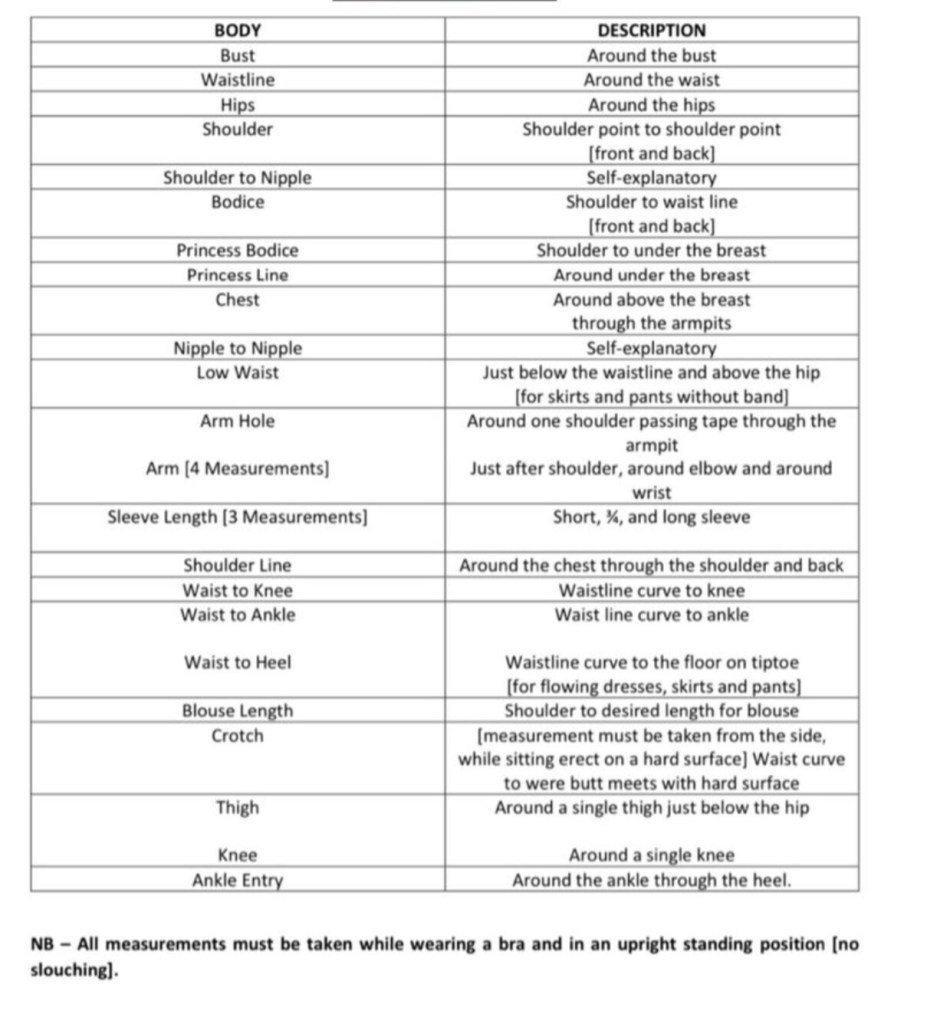
Customer Measurement Guide
I advise taking the full measurements of a client not withstanding what you are making for them. For instance, if you are making a dress for a client, measure them like you are intending to make a palazzo trouser for them also. That way, if they ever need to make something else for themselves you already have their measurements, no need to meet up to measure again. Kill twelve birds with one stone 🙂
It is also an advantage if you as the designer take these measurements yourself. I have had cases where distance was a barrier and my clients met a friend or another designer to take their measurements to send to me and it was either inaccurate or I couldn’t understand the abbreviations and lingo of the designer.


