If you intend to venture into the world of fashion designing, you’ll have to acquire the knowledge to practice the art first. It is not enough to know how to combine clothes as fashion designing is not styling. Styling is putting outfits that go together and complement each other while fashion designing is curating and making these outfits from scratch to finish. For every fashion designer, there is a decision to learn how to sew or not. It is possible to design clothes and sort out the fabrics you intend to use to make them, then source our tailors to sew them per your designs. On the other hand, you can be a designer and tailor, designing and sewing your clothes (which is what I do). Whichever decision you make, here are some basic tools you’ll need in your toolbox!
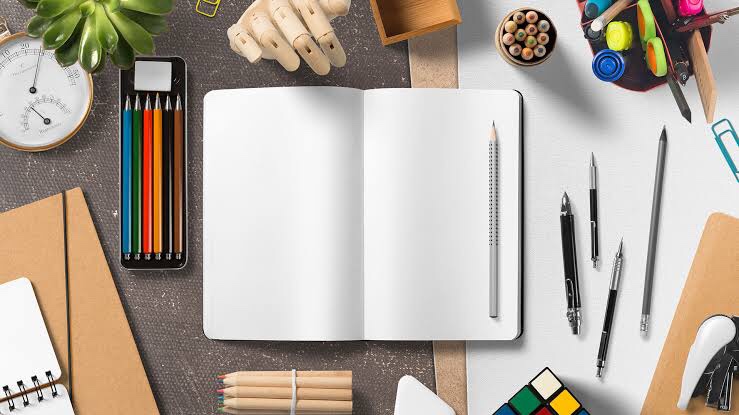
Sketchbooks and Pens
As a designer, you need a canvas for your designs, and a template to transfer your creative thoughts. Your sketchbook can be used to draw designs of clothes you want to work on. They don’t have to be perfect, you can simply just represent your idea in a way you will understand them or your tailors would. However, you should consider learning how to draw a croquis mannequin. Aside from sketches, you can use your book to write down other details of your work such as random ideas, measurements, pricing and fabrics or embellishments you need for a coming project.
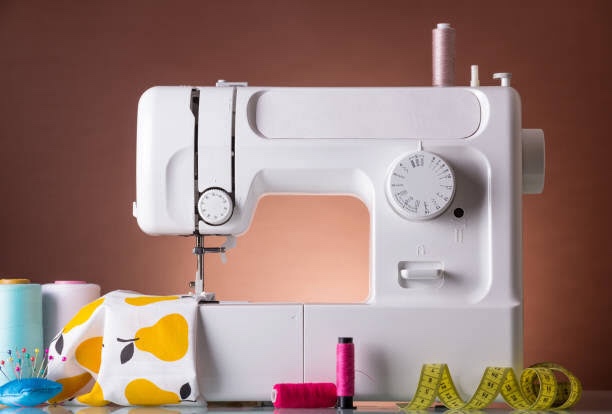
A sewing machine
This is dependent on if you want to sew your designs or not. In my opinion, even if you don’t want to sew, you should possess the basic skills of sewing and even own a small portable machine, just in case you need to tailor an already-made outfit to perfection. There are different types of sewing machines, there are domestic machines, manual machines, electric machines, industrial machines, overlocking machines or sergers and many more. Deciding which to get will depend on your personal choice, space, availability of electricity, mobility, use and other factors.
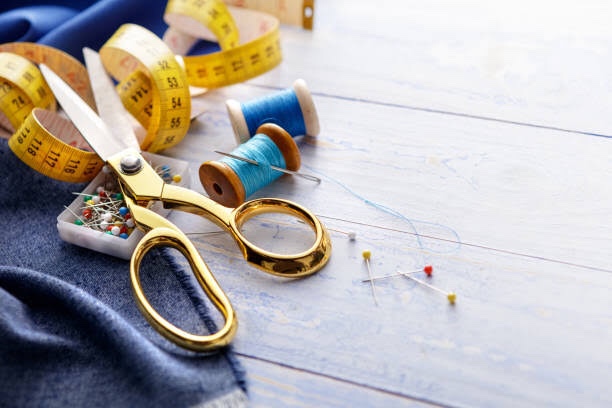
Measuring tape, Rulers and Scissors
Every designer needs these as they are highly essential. Measuring tapes are flexible lengthy tapes that can be bent, curved and shaped around a surface to get their measurements in inches, centimetres or even meters. Rulers are also used to measure but they are not flexible. They are used to measure people, mannequin dummies, fabrics, pattern paper and everything a designer needs to measure.
Scissors are quite important too, especially to a tailor for cutting and snipping threads, fabrics, papers or interfacing. There are different types and sizes of scissors depending on their purpose and what type of material they are used on.
Pattern Papers and Markers
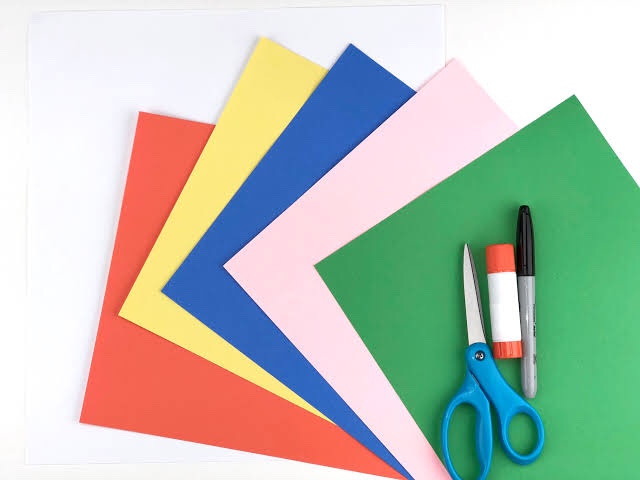
Pattern papers are big-sized papers that a designer can use in place of fabrics. They come in different sizes and colours like light brown and white. Pure designers and tailors alike use this valuable material to precut designs before they are transferred to the main fabric. This tool is especially important to filter out mistakes when cutting the main fabric and also to examine what the cloth would look like before the main one is produced. Some designers tend to use practice fabrics like muslin (cotton lining) to test their designs first.
Measurements are transferred to these pattern papers, test fabrics and even real fabrics by making markings of inches or centimetres on them. These markings are done with markers, fabric pens, crayons and tailor’s chalk. It’s advisable to work with erasable markings for fabrics so the marks don’t linger after the clothes are completed.
Mannequins
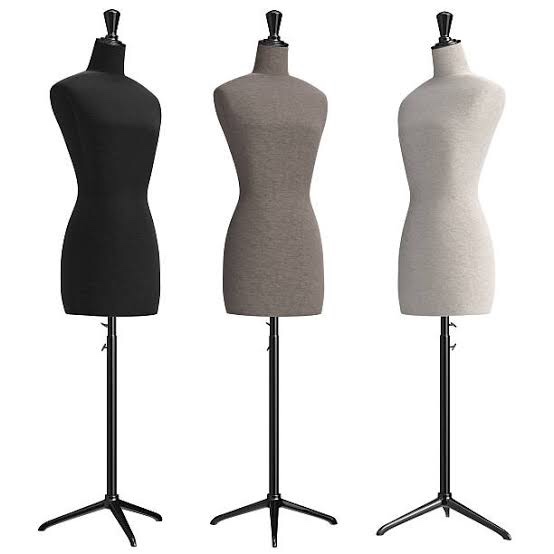
Mannequins are dummies modelled after the body shape of a human being that is used to showcase your clothes as a designer. There are different types of mannequin forms ranging from men to women to children. This range further extends to what parts of the body the mannequin has. Some are headless, handless or have only upper bodies, lower bodies or full bodies. Others differ based on the activity or body position the dummy takes. Some may be sitting, in a striding pose, standing with hands on hips, in the air, or even under their jaw. Mannequins are made of plastic, rubber and other durable materials. Some mannequins are soft and pins can go through them. These are usually called dress forms. They are good for draping, embellishing or when making “made-to-fit” clothes. As a designer, it is important to choose a mannequin that fits the type of clothes you make, so that your clothes would be represented properly.
These are a few essential tools to kick off your fashion design game. There are a lot more we’ll be covering in another article. Don’t make a big fuss if you don’t have all these as a beginner, it is totally fine. You can start with what you have and what is practical to you at for now, and look to develop your toolbox as you go! 🤗

 Planet Zaiy